Top Stories
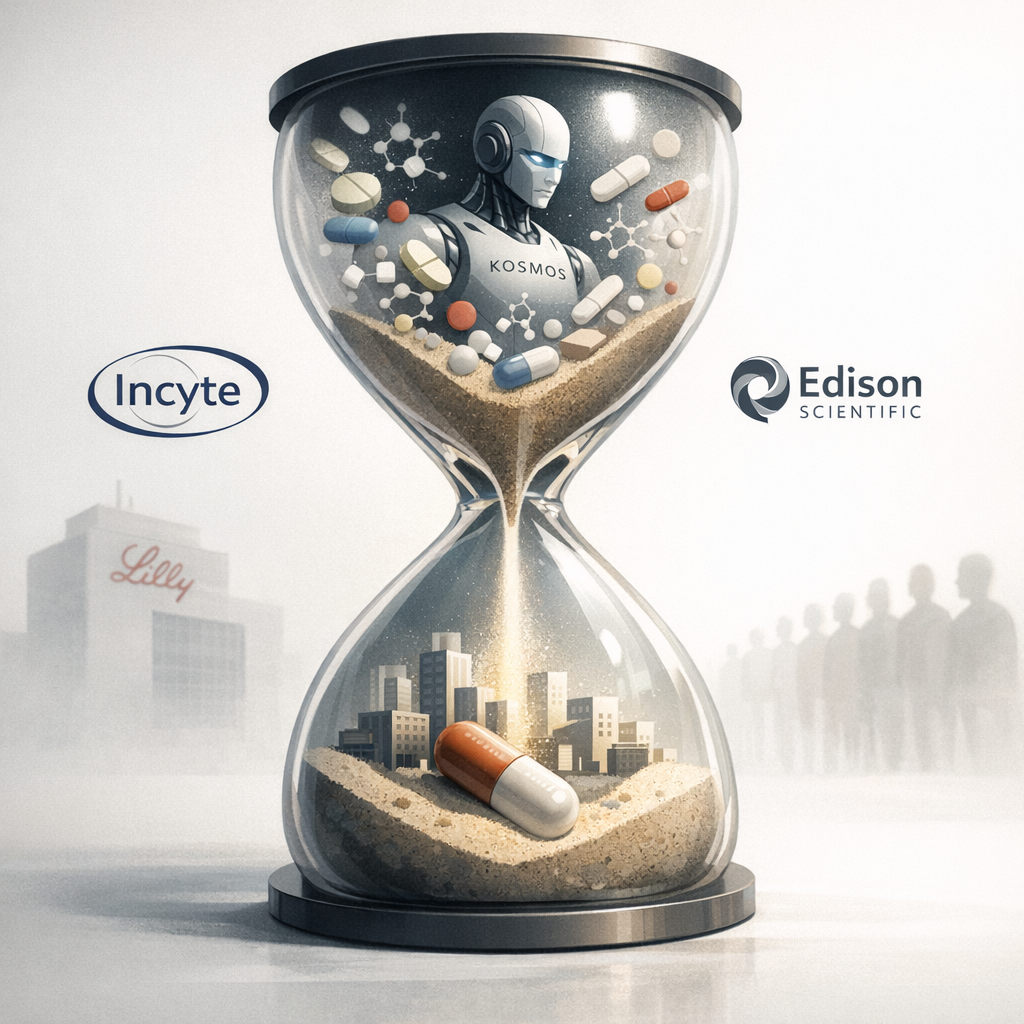
1. Incyte inks deal with Edison Scientific to train AI through drug discovery
• Incyte partners with Edison Scientific to deploy AI scientist Kosmos across drug discovery, joining the $1.8 billion AI drug discovery market growing 18.8% annually.
• Edison’s AI platform compresses drug development from 4-5 years to 12 months with 80-90% Phase I success rates versus traditional 40%.
• This follows major pharma AI investments including Eli Lilly’s $2.75 billion partnership and 173+ AI-originated programs entering clinical trials by 2026.
2. Immunotherapy drug target identification using machine learning and patient-derived tumour explant validation
• MIDAS, a multimodal graph neural network, identifies cancer immunotherapy targets with 80%+ accuracy, outperforming OpenTargets and other methods across 260 known targets.
• The system successfully validated oncostatin M-OSMR signaling in 8 melanoma patient samples, reducing dysfunctional CD8+ T cells by significant margins.
• Machine learning target discovery could reduce the $2.6+ billion average drug development costs by improving success rates from current 10-15% clinical approval rates.
3. Predicting categorical and continuous Alzheimer’s disease outcomes from a single MRI scan
• Researchers developed a multitask deep learning framework that predicts Alzheimer’s disease diagnosis, cognitive scores, and future cognitive decline from single baseline MRI scans, achieving 92.82% diagnostic accuracy and R² of 0.82 for cognitive prediction.
• This breakthrough enables accurate cognitive assessment without expensive PET scans, longitudinal data, or time-consuming neuropsychological testing, potentially reducing clinical trial sample sizes and costs by identifying rapid disease progressors from single scans.
• The technology represents a shift toward accessible AI-driven neurological assessment using standard imaging equipment, democratizing early dementia detection and prognosis capabilities for community clinics lacking specialized neuroimaging resources.
4. Qiagen links with chip giant Nvidia to propel AI use in drug discovery
• Qiagen partners with Nvidia to integrate AI into drug discovery, combining 25+ years of biomedical knowledge with GPU-accelerated systems via Nvidia’s BioNeMo platform.
• Partnership enables researchers to analyze complex biological data connections across genes, diseases, pathways, and compounds for improved target identification and biomarker research.
• Reflects broader trend as AI drug discovery market explodes from $1.1B (2024) to projected $43.9B by 2035, with 30.5% CAGR driving Big Tech-biotech collaborations.
5. Augmented Reality and the Shared Mental Model in Pediatric Resuscitation
• Researchers tested augmented reality decision support in pediatric resuscitation with 18 teams, finding 32.4-second improvement in second epinephrine timing and 75% fewer algorithm deviations.
• AR technology shows promise for reducing medical errors during later resuscitation phases when team fatigue increases, though first critical actions remained unchanged.
• Study demonstrates AR’s potential for team coordination across healthcare settings like emergency rooms and operating rooms, requiring implementation studies for real-world adoption.
More Headlines & Launches
1. Incyte pays Genesis $80M to expand AI-fueled drug discovery pact
• Incyte expanded its Genesis AI partnership with $80M upfront plus $40M equity investment, scaling from 2 to 5+ drug targets with $1B+ milestone potential.
• This 4x payment increase ($30M to $120M total) demonstrates AI drug discovery’s proven ROI, given 80-90% Phase I success rates versus traditional 9-14%.
• Major pharma’s $300M+ AI investments reflect market trajectory toward 29.9% CAGR growth, reaching $6.89B by 2029 versus traditional discovery methods.
2. Twin Health Launches AI-Native GLP-1 Stewardship Model to Slash Cardiometabolic Spending for Employers
• Twin Health launched an AI-driven GLP-1 stewardship model that enabled 85% of patients to discontinue expensive weight-loss medications while achieving 2x greater weight loss.
• Employers capture $7,532 savings per employee over two years through reduced GLP-1 utilization, with Twin Health’s programs delivering $9,000+ annual savings per member.
• AI-native medication stewardship models represent a shift toward personalized, cost-effective metabolic medicine that reduces long-term pharmaceutical dependence through data-driven treatment optimization.
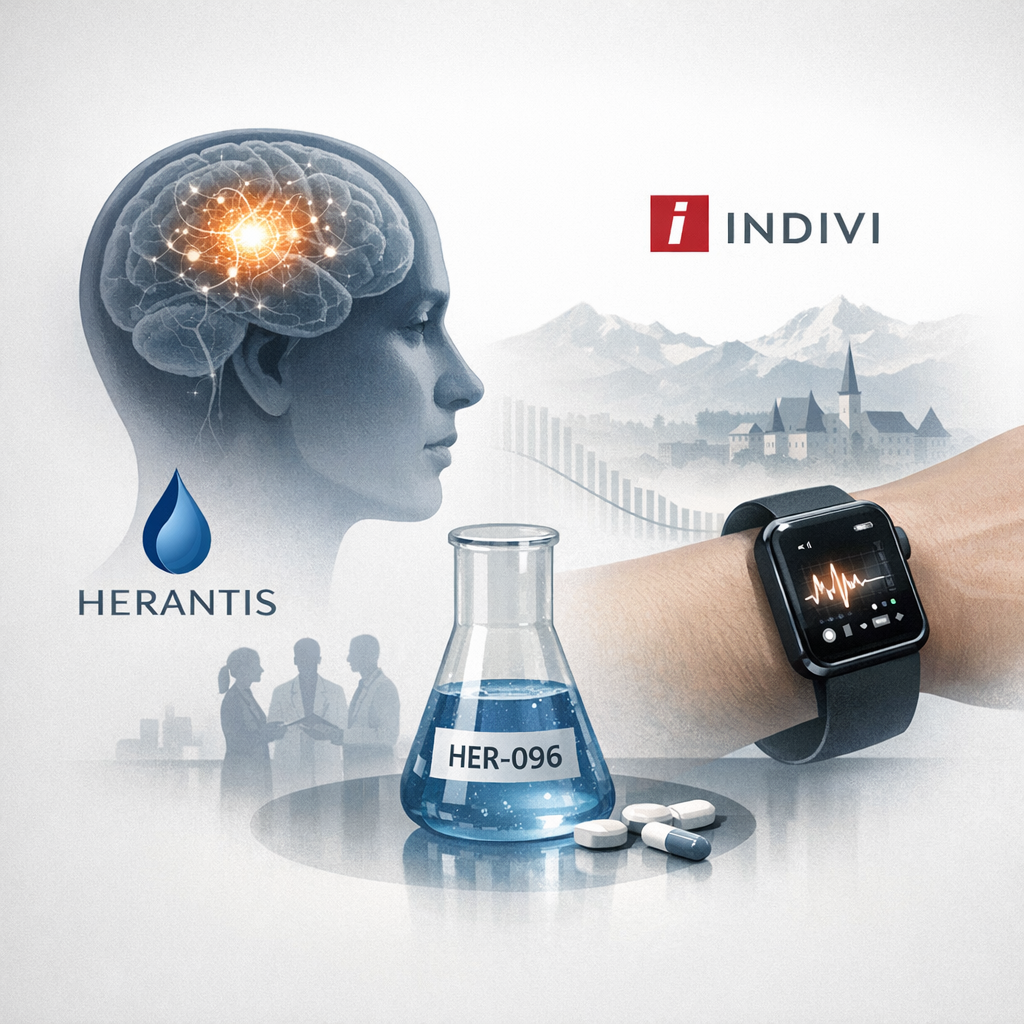
3. Herantis taps Indivi for digital biomarker tech in Parkinson’s disease trial
• Finnish biotech Herantis partners with Swiss medtech Indivi to integrate digital biomarker technology into its Phase 2 Parkinson’s disease trial of HER-096.
• The collaboration aims to enable earlier treatment detection, reduce study duration, allow smaller patient cohorts, and potentially lower clinical trial costs.
• Reflects growing digital biomarker market ($117.79M in 2024 → $350.87M by 2033, 19.25% CAGR) transforming neurodegenerative disease drug development efficiency.
More Deep Dives & In Depth Analysis
1. Augmented Reality–Guided Decision Support in Simulated Pediatric Cardiac Arrest
• This randomized clinical trial of 54 participants across 18 teams tested augmented reality-guided decision support for pediatric cardiac arrest, showing no significant improvement in time to first epinephrine (97.2 vs 113.8 seconds, P=.40).
• AR support reduced epinephrine dosing interval violations from 43% to 11% and decreased timing deviation by 32.4 seconds (P=.03), demonstrating improved guideline adherence without compromising CPR quality.
• This multicenter study validates AR clinical decision support feasibility in critical care, potentially accelerating adoption of immersive technologies for real-time medical guidance and protocol compliance enhancement.
2. Dual-Site aiTBS for Suicidal Ideation in Adolescents With Major Depressive Disorder
• This randomized clinical trial of 59 adolescents with major depressive disorder found dual-site accelerated intermittent theta burst stimulation reduced suicidal ideation 4.94 points more than single-site treatment.
• The 4-day dual-site protocol targeting brain’s left DLPFC and cerebellum achieved 59% response rates versus 37% for standard single-site treatment in high-risk adolescents.
• This rapid-acting neuromodulation approach represents a shift toward multi-target brain stimulation therapies, potentially revolutionizing adolescent mental health treatment accessibility and efficacy timelines.
3. Live Attenuated MMR and Varicella Vaccinations and Multiple Sclerosis Activity
• This cohort study of 369 MS patients found live attenuated MMR and varicella vaccines showed no increased relapse risk compared to unvaccinated controls over 1 year.
• The findings support current vaccination guidelines and may reduce vaccine hesitancy among MS patients requiring immunization before starting immunosuppressive therapies.
• This safety data strengthens evidence for personalized vaccination protocols in autoimmune disease management, advancing precision medicine approaches in neurological therapeutics.
4. Access to CAR-T Clinical Trials for Non-Hodgkin Lymphoma for Persons With HIV
• This cross-sectional study of 80 CAR-T clinical trials found that persons with HIV face 37% longer travel times (1.15 vs 0.84 hours) to access non-Hodgkin lymphoma trials.
• Only 27.5% of actively recruiting CAR-T trials include HIV patients, with 45.5 million Americans living over 3 hours from HIV-inclusive trial sites.
• Geographic disparities in cutting-edge therapy access highlight need for decentralized trial models as HIV patients increasingly face cancer as leading mortality cause.
More New Research
1. Large Language Models in Colorectal Cancer Care and Clinical Decision Support: Systematic Review
• This systematic review analyzed 37 studies (2023-2026) evaluating large language models like GPT-4 across colorectal cancer care, finding only 27% had low bias risk.
• LLMs demonstrated utility in automating clinical data extraction, patient education, and diagnostic support, with domain-specific models outperforming general-purpose ones in certain tasks.
• Despite promising applications, methodological quality concerns and lack of real-world validation studies highlight need for rigorous multicenter trials before widespread clinical deployment.
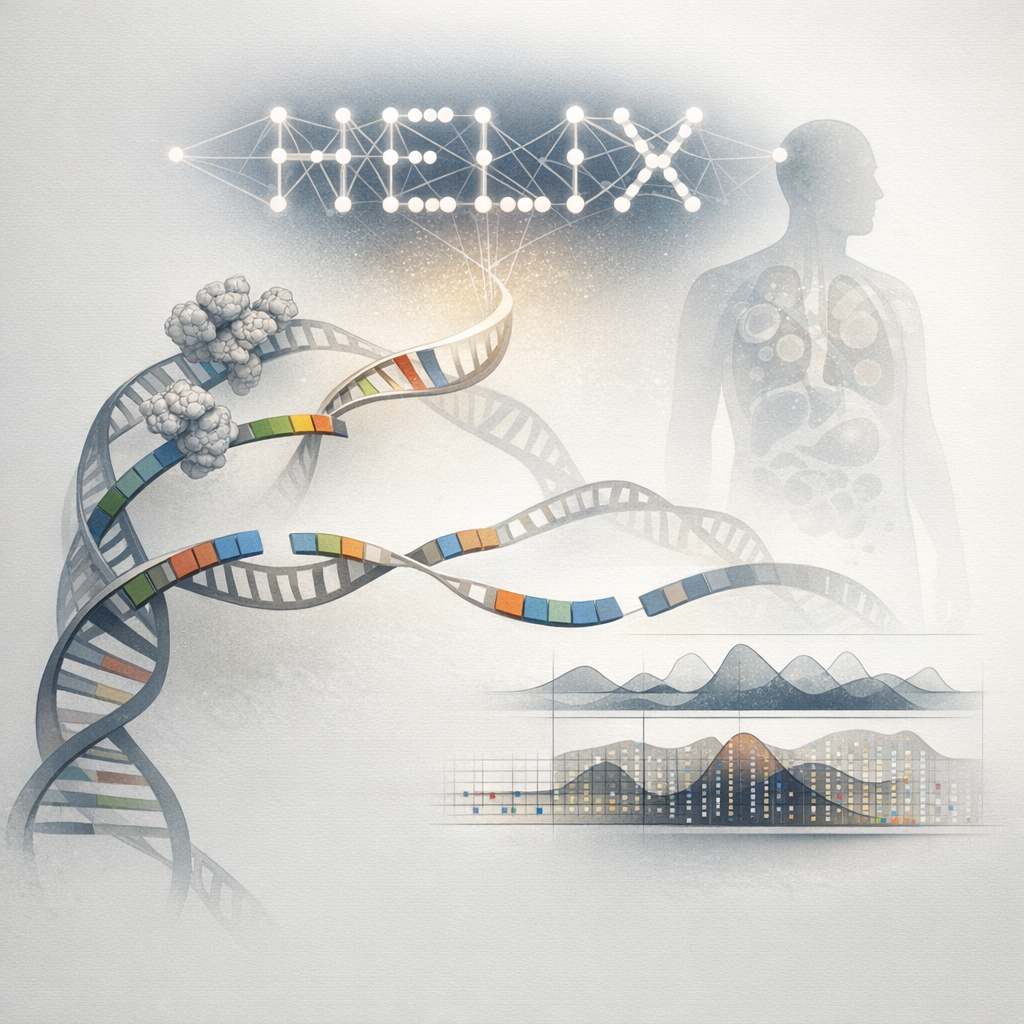
2. HELIX: a scalable model for predicting context-dependent regulation of RNA splicing and isoform usage
• HELIX is a deep learning framework that predicts tissue-specific RNA splicing and isoform usage by integrating pre-mRNA sequences with RNA-binding protein expression profiles.
• The model achieves superior accuracy over existing methods for predicting differential splicing events and enables systematic identification of splicing quantitative trait loci across tissues.
• HELIX’s scalable architecture supports both bulk and single-cell RNA sequencing data, advancing precision medicine through patient-specific splicing dysregulation predictions in cancer cohorts.
3. Machine learning based hepatic safety score predicts decompensation in hepatocellular carcinoma systemic therapy
• Researchers developed a machine learning hepatic safety score using 2,026 HCC patients that predicts liver decompensation with 84% accuracy (AUROC 0.840).
• MHSS-guided treatment selection showed 24% reduction in hepatic decompensation, 40% reduction in variceal bleeding, and 26% reduction in mortality.
• Demonstrates AI’s potential for personalized cancer treatment selection, particularly for bevacizumab-containing regimens in hepatocellular carcinoma patients with portal hypertension.