
Headlines & Launches
- Eli Lilly announces TRIUMPH-1 Phase 3 results for retatrutide: up to 28% body-weight loss at 80 weeks — the highest ever seen in an obesity drug trial
- Guardant Health wins FDA approval for the Guardant360 Liquid CDx, the world’s largest liquid biopsy panel with a 100× wider genomic footprint and integrated epigenomic profiling
- AstraZeneca’s Baxfendy (baxdrostat) becomes the first-ever aldosterone synthase inhibitor approved for hypertension
- Arvinas / Pfizer’s Veppanu (vepdegestrant) receives FDA approval for ESR1-mutated advanced breast cancer — a first-in-class PROTAC protein degrader
- Amazon Web Services launches Amazon Connect Health, purpose-built agentic AI for clinical documentation, coding, and patient engagement
Deep Dives & In Depth Analysis
- EDEN: A 28-Billion Parameter DNA Foundation Model That Designs Therapeutics from Evolutionary Data
- Digital Health VC Funding Hits Record Highs in Q1 2026 — AI Is Now “Table Stakes”
- Agentic AI Moves from Hospital Pilots to Enterprise Production
- AI Drug Discovery Enters the “Builder Phase”: From Isolated Tools to Integrated Systems
New Research
- ASCO 2026: AI-powered whole-slide image analysis transforms tumor microenvironment profiling across multiple cancers
- ASCO 2026: AI finds hidden immune signals in routine bone marrow biopsies to personalize multiple myeloma treatment
- Multi-cohort proteogenomic analyses across 78,664 individuals reveal disease mechanisms and drug repurposing opportunities
- LLMs facilitate genetic diagnosis and discovery, solving rare disease cases from clinical descriptions alone
- AI-driven protein structure ensemble rectification using physics-based computation
Market Outlook
| Price (USD) | 1D | YTD | |
|---|---|---|---|
| Company | |||
| Eli Lilly and Company (LLY) | ~$890 | +3.2% | |
| Guardant Health (GH) | ~$106 | +8.8% | |
| Novo Nordisk A/S (NVO) | ~$44 | -1.1% | |
| AstraZeneca (AZN) | ~$78 | +0.6% | |
| Sector Index | |||
| iShares Biotechnology ETF (IBB) | — | — | |
| State Street SPDR S&P Biotech ETF (XBI) | — | — |
Headlines & Launches
1. Lilly’s “Triple-G” Retatrutide: 28% Weight Loss — A New High-Water Mark for Obesity Medicine
On May 21, 2026, Eli Lilly disclosed topline results from TRIUMPH-1, the largest and longest Phase 3 trial to date of retatrutide, its first-in-class GIP, GLP-1, and glucagon triple hormone receptor agonist (“triple-G”). The headline number: participants on the 12 mg dose who stayed on treatment for 80 weeks lost up to 28% of their body weight — the highest weight-loss figure ever reported for a pharmaceutical agent in a controlled trial.
Crucially, even the lowest dose tested (4 mg) met all primary and key secondary endpoints, and a pre-specified analysis found a meaningful fraction of participants achieving a BMI below 30 — a threshold synonymous with moving from the “obese” to “overweight” category.
The TRIUMPH-1 design enrolled adults with obesity or overweight and at least one weight-related comorbidity (such as hypertension or heart disease) but without diabetes — the largest and most commercially relevant obesity population. The finding is strategically important for Lilly because it sets up retatrutide as a potential successor to the already blockbuster Zepbound (tirzepatide), which posted $13 billion in sales in 2025.
Retatrutide builds mechanistically on its predecessors. Foundayo (orforglipron), Lilly’s oral GLP-1 pill already submitted to the FDA, modulates only GLP-1. Zepbound adds a second gut hormone, GIP, to that mix. Retatrutide modulates all three — GLP-1, GIP, and glucagon — creating what Lilly calls a “neurometabolic” approach to obesity. Analysts have described this result as “raising the bar for future novel obesity drug developers,” with Leerink Partners highlighting the combination of substantial weight loss and a lower discontinuation rate due to side effects than placebo.
The broader competitive landscape is shifting fast: Novo Nordisk is racing to close the gap with CagriSema (a combination of cagrilintide and semaglutide), which showed ~23% weight loss at 68 weeks in trials. Pfizer has also entered the picture, acquiring obesity biotech Metsera and licensing an oral GLP-1 candidate from Fosun’s YaoPharma for $2 billion. But for now, Lilly’s retatrutide data puts the field “on notice.”
2. Guardant360 Liquid CDx: FDA Clears the World’s Largest Liquid Biopsy Panel
On May 20, 2026, Guardant Health announced FDA approval for the new Guardant360 Liquid CDx — the first liquid biopsy to simultaneously profile both the genotype (mutations, fusions, copy number alterations) and key phenotype (epigenomic) information from a single blood draw.
The new panel assesses a 100× wider genomic footprint than the previous Guardant360 CDx, powered by Guardant’s proprietary Smart Platform — an AI-enabled multiomic technology stack trained on data from over one million patients. Results come back in as little as seven days, regardless of tissue availability or line of therapy.
The approval retains all seven previously established companion diagnostic indications (spanning non-small cell lung cancer, colorectal cancer, and ESR1-mutated breast cancer), while setting the stage for new clinical applications. Guardant’s chairman and co-CEO Helmy Eltoukhy called it “a new era: one where genomics, epigenomics, advanced AI, and learnings from more than one million patients converge to deliver a more complete, actionable view of cancer from just a blood draw.”
The clinical significance is substantial: liquid biopsy eliminates the need for invasive tissue biopsy in many settings, enables real-time monitoring of treatment response, and can detect emerging resistance mutations earlier than symptom-based monitoring. The epigenomic layer adds a new dimension — methylation patterns and chromatin state information that can reveal cancer cell-of-origin, predict immunotherapy response, and stratify prognosis in ways that genomics alone cannot.
Guardant expects 2026 revenue growth of 27–30% year-over-year, reflecting the combined contribution of Guardant360 Liquid CDx and the nationwide rollout of Shield, its colorectal cancer screening blood test, through Quest Diagnostics.
3. Two More Notable FDA Approvals This Week
Baxfendy (baxdrostat) — approved May 15, 2026 by AstraZeneca — is the first drug in a new pharmacological class: a highly selective aldosterone synthase inhibitor (ASI) for hypertension. Aldosterone, produced by the enzyme encoded by CYP11B2, plays a central role in sodium retention and blood pressure regulation. By selectively blocking CYP11B2, baxdrostat lowers aldosterone levels without the adrenal suppression associated with non-selective agents. AstraZeneca executives project it could become a “big product” generating $5 billion or more in annual sales, targeting the large population of patients with uncontrolled hypertension or primary aldosteronism.
Veppanu (vepdegestrant) — approved May 1, 2026 by Arvinas and Pfizer — is one of the first FDA-approved PROTAC (PROteolysis TArgeting Chimera) drugs. Rather than inhibiting the estrogen receptor, vepdegestrant recruits the cell’s own ubiquitin-proteasome machinery to physically degrade it. Indicated for ESR1-mutated, ER+/HER2− advanced or metastatic breast cancer, Veppanu represents the clinical arrival of protein degradation as a therapeutic modality — a paradigm that could eventually address targets long considered “undruggable” by conventional inhibitors.
4. Amazon Connect Health: Agentic AI Purpose-Built for Clinical Workflows
Amazon Web Services launched Amazon Connect Health in March 2026, bringing a suite of five purpose-built AI agents to healthcare provider workflows. The platform tackles high-volume administrative tasks — clinical documentation, medical coding, appointment scheduling, and patient verification — with agentic AI that can reason over EHR context, handle multi-step processes end-to-end, and escalate to human staff when needed.
The launch follows a January 2026 flurry of healthcare AI platform debuts: Anthropic’s Claude for Healthcare and OpenAI for Healthcare both debuted that month, each offering HIPAA-eligible large language model capabilities tuned for clinical use cases. Together, these announcements signal that the major cloud and AI providers are now competing directly in the clinical AI infrastructure market — a shift from general-purpose tools to purpose-built healthcare agents.
At the 2026 J.P. Morgan Healthcare Conference, Nvidia VP Kimberly Powell described 2025 as “an absolute breakout year for agentic AI” in healthcare, noting that providers are deploying these tools specifically to mitigate the effects of healthcare workforce shortages. Mayo Clinic and Mount Sinai Health System are already using agentic AI to streamline prior authorization, eligibility verification, and prescription support. The UK’s NHS has launched a pilot for responsible deployment of agentic AI across the system.
A Deloitte survey found that over 80% of healthcare executives expect both agentic and generative AI to deliver moderate-to-significant value across clinical and operational functions in 2026, with 98% expecting at least 10% cost savings from agentic deployments.
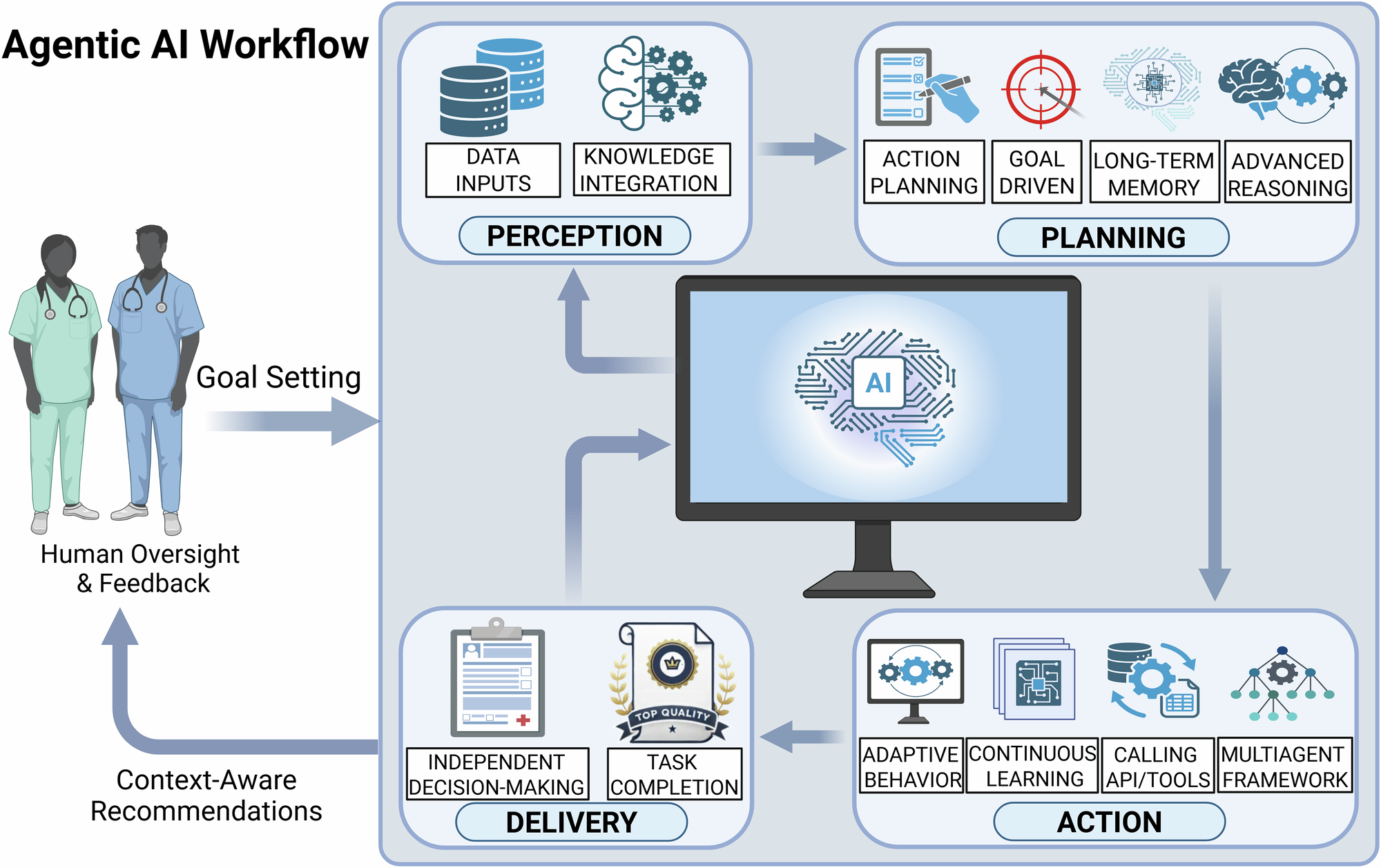 Agentic AI workflow in healthcare: the system perceives clinical context, autonomously plans and executes actions, and delivers outputs back to the healthcare worker. Source: npj Digital Medicine, 2026
Deep Dives & In Depth Analysis
1. EDEN: A 28-Billion Parameter DNA Foundation Model That Designs Therapeutics from Evolutionary Data
Basecamp Research, a UK-based biotech AI company, published a landmark preprint in January 2026 introducing EDEN (Environmentally-Derived Evolutionary Network) — a family of DNA foundation models trained on 9.7 trillion nucleotide tokens from the company’s proprietary database, BaseData. The largest model, EDEN-28B, was trained on more than 10 billion novel genes from over one million species collected from 150 locations across 28 countries over five years.
What makes EDEN unusual — and potentially transformative — is its training philosophy. While most biological foundation models scrape from the same public databases (68% of all sequence data in the NCBI SRA comes from just five species), Basecamp physically collected environmental metagenomes from biodiversity hotspots worldwide. The result is a dataset with 10× more protein diversity than all public databases combined, with a median contig length of 18.6 kb — four times longer than comparable public datasets. This means the model learns genes in genomic context, not as isolated fragments.
Crucially, no human, lab, or clinical data appears in the pre-training set. EDEN learns the deep grammar of biology entirely from evolutionary data across the tree of life. Therapeutic capabilities emerge only at fine-tuning time.
The team demonstrated EDEN’s therapeutic design capabilities across three distinct modalities:
1. Programmable Gene Insertion. Large Serine Recombinases (LSRs) can integrate large DNA payloads (>30 kb) at specific genomic loci without creating the double-strand breaks that CRISPR requires. The problem: only a handful of natural LSRs have been characterized. EDEN changed this. Prompted with just 30 nucleotides of a target genomic site, EDEN designed novel LSR enzymes for 100% of tested disease-associated loci — including ATM, DMD, F9, FANCC, and others — with a 63.2% overall functional hit rate. Some of the best candidates shared as little as 52% sequence identity with any known protein. In primary human T cells, EDEN-generated LSRs achieved therapeutically relevant levels of CAR construct insertion, with 50% of variants active and over 90% cancer cell clearance in laboratory assays.
2. Antimicrobial Peptide Design. Against WHO critical-priority multidrug-resistant pathogens — the bacteria for which we are rapidly running out of antibiotics — EDEN generated a library of novel peptides with a 97% functional hit rate (32 of 33 tested), with top candidates achieving single-digit micromolar potency. The team notes this is “the first instance a DNA foundation model has been used directly for peptide and antibiotics design with proven potency in ground-truth experiments.”
3. Synthetic Microbiomes. EDEN designed a gigabase-scale synthetic microbiome comprising 94,000+ metagenomic assemblies, covering 9,067 species with 99% biome-specific taxonomic accuracy. Over 1,500 generated species were entirely outside the fine-tuning dataset — novel biology generated de novo — yet retained correct microecological properties.
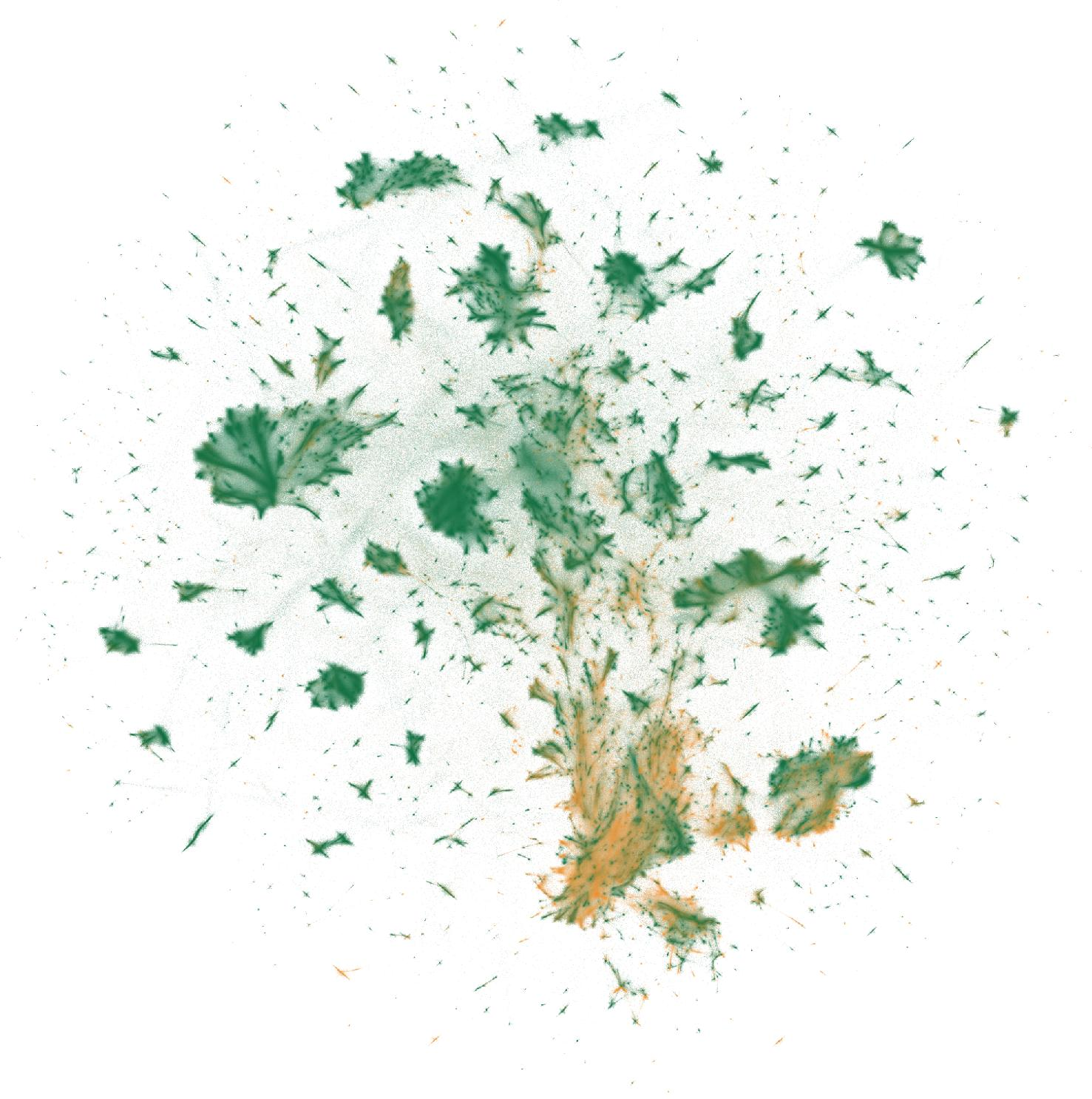 UMAP projection of metagenomic assemblies from BaseData, showing the extraordinary diversity of ecological niches represented in EDEN’s training data. Each cluster represents a distinct environment sampled during Basecamp’s five-year global collection effort. Source: Munsamy et al., bioRxiv 2026 / rewire.it
The project is a collaboration spanning NVIDIA, Microsoft, and researchers from UPenn, Johns Hopkins, Oxford, Stanford, UC Berkeley, and CRG Barcelona. NVIDIA’s BioNeMo infrastructure powered training on 1,008 Hopper GPUs. NVIDIA Ventures (NVentures) has made an undisclosed investment in Basecamp’s pre-Series C round. In March 2026, Basecamp announced a partnership with PacBio to sequence 100,000 samples from 31+ countries for the Trillion Gene Atlas — aiming to expand known evolutionary genetic diversity 100-fold.
The honest caveat: these are still pre-clinical results. No EDEN-designed therapeutic has entered a human trial. But a foundation model that designs functional gene-editing enzymes from a 30-nucleotide prompt — enzymes that actually work in human T cells — is a meaningful proof-of-concept for the long-term ambition of making therapeutic design a predictable engineering discipline.
| Source: bioRxiv preprint | Deep-dive analysis: rewire.it |
2. Digital Health VC Funding: $4B in Q1 2026 — AI Is “Table Stakes”
Digital health startups raised $4 billion in venture capital in Q1 2026 — a $1 billion increase over Q1 2025 and the strongest first quarter since the pandemic funding peak. The 110 deals averaged $36.7 million per round, the highest average deal size since Q4 2021, with 12 megadeals of $100 million or more accounting for 59% of all capital deployed.
The quarter’s standout rounds: Whoop (wearable-maker) closed a $575 million Series G at a $10.1 billion valuation; Verily (Alphabet’s precision health platform) raised $300 million; and OpenEvidence (AI-powered healthcare search) secured $250 million.
In a telling signal of AI’s maturation in healthcare, Rock Health retired its “AI deal” tracking category this quarter. The firm noted that AI has become so embedded in digital health that it is now impossible to distinguish AI rounds from the broader market — making it “table stakes” rather than a differentiating investment thesis.
On the pharma side, Earendil Labs (Wilmington, DE) raised a staggering $787 million in March 2026 to build AI-designed antibodies and biologics — including bispecifics, T cell engagers, and dual-targeting ADCs — backed by Dimension Capital, DST Global, Sanofi, and others. Beeline Medicines launched with $300 million from Bain Capital to advance precision therapies for autoimmune disease. And Alloy Therapeutics raised $40 million in a Series E to expand its AI-enabled drug discovery infrastructure platform.
UnitedHealth Group projects AI could save nearly $1 billion in 2026, while HCA Healthcare expects roughly $400 million in AI-driven cost savings, partly from automating revenue management. The AI biotech sector, meanwhile, is widely characterized as moving past foundational models into a “clinical era,” with multiple AI-designed drug candidates expected to reach critical Phase 3 milestones throughout 2026.
3. Agentic AI Moves from Hospital Pilots to Enterprise Production
The defining operational story of 2026 in healthcare IT is the transition of agentic AI — autonomous, goal-directed AI systems that can plan and execute multi-step workflows — from isolated proofs-of-concept into full-scale enterprise deployment.
Unlike a chatbot or clinical decision support tool, an agentic AI system can autonomously retrieve patient data from multiple systems, identify patients at high risk of a condition, schedule follow-up, coordinate care teams, generate documentation, apply billing codes, and submit claims — all with minimal human intervention. The key shift is from AI that assists humans to AI that orchestrates workflows.
Real-world deployments are accelerating:
- Mayo Clinic is using agentic AI to handle eligibility verification, prior authorization, utilization management, and prescription support
- Mount Sinai Health System is deploying agents to streamline clinical documentation and surface personalized care recommendations
- Hackensack Meridian Health reduced its insurance appeals processing time from 15–16 days to one or two days using an AI agent that reads denial letters, assembles corrected documentation, and routes to nurses for approval
- Color Health (cancer care) partnered with Google to deploy an agentic AI that screens patients for breast cancer eligibility, gathers clinical information, and routes cases to clinicians
- The UK NHS launched a responsible deployment project for agentic AI across the system
A Deloitte survey found that adoption hurdles are easing: over 80% of executives expect moderate-to-significant value from agentic AI in 2026, and 98% expect at least 10% cost savings. The biggest remaining challenge is not the technology but the governance: deciding where autonomous action can unlock enterprise value without increasing clinical, financial, or compliance risk.
The emerging research literature mirrors this trend. A May 2026 arXiv preprint introduces CHI-Bench, a benchmark asking whether AI agents can automate end-to-end, long-horizon, policy-rich healthcare workflows — an attempt to systematically evaluate the frontier of what autonomous clinical AI can do.
4. AI Drug Discovery Enters the “Builder Phase”: From Isolated Tools to Integrated Systems
According to the 2026 Biotech AI Report from Benchling, the life sciences sector has entered what the firm calls a “builder phase” — where the most successful organizations are no longer just running AI pilots but are actively reshaping data infrastructure and organizational processes to make AI a default part of R&D operations.
Half of organizations adopting AI in biotech already report faster time-to-target, and 42% see an uplift in accuracy and hit rates with scientific models. Protein structure prediction — led by AlphaFold and its derivatives — is now used by 73% of AI-adopting organizations, and docking models are used by 52%. A staggering 80% of organizations plan to increase their AI budgets in the next 12 months, with 23% expecting to double or more.
The market is reflecting this: AI drug discovery is projected to grow from $5–7 billion in 2025 to $8–10 billion in 2026, with some estimates suggesting generative AI could ultimately deliver $60–110 billion annually in value for pharma overall.
The EU AI Act’s high-risk provisions take effect on August 2, 2026, potentially classifying some drug development AI applications as high-risk, creating new compliance requirements for pharma companies using AI in regulatory-critical applications. Meanwhile, the FDA is expected to finalize its draft guidance on AI in drug development — requiring sponsors to submit credibility assessment plans for high-risk AI applications including model architectures, training data, and governance documentation.
One emerging technical trend worth watching: reinforcement learning with verifiable rewards (RLVR) applied to scientific agents capable of autonomous multi-step research tasks. Organizations are deploying frameworks that combine LLMs with reinforcement learning to automate literature review, hypothesis generation, experimental design, and data analysis in closed loops — compressing what used to take weeks to days.
New Research
1. ASCO 2026: AI Reshapes Tumor Microenvironment Analysis and Treatment Selection
The 2026 ASCO Annual Meeting (May 29–June 2, Chicago) features a notable concentration of AI-driven oncology research, reflecting how rapidly computational pathology is moving from research tool to clinical decision support.
Lunit is presenting five studies using AI-powered whole-slide image (WSI) analysis to characterize HER2 expression, immune phenotypes, tertiary lymphoid structures (TLS), tumor-infiltrating lymphocytes (TILs), and endothelial cells across biliary tract, lung, colorectal, and gastric cancers. One featured study shows that AI-powered spatial analysis can identify MSS colorectal cancer patients more likely to respond to immunotherapy — a population historically excluded from checkpoint inhibitor treatment.
Artera is presenting two breast cancer studies at ASCO demonstrating that its Multimodal AI (MMAI) platform — which integrates digitized histopathology images with clinical data — can stratify prognosis and predict chemotherapy benefit in both node-negative and node-positive HR+ breast cancer, building on its recent FDA clearance of ArteraAI Breast.
Sylvester Comprehensive Cancer Center (University of Miami) will present research showing that AI can uncover clinically meaningful immune signals hidden in standard bone marrow biopsy slides from multiple myeloma patients, without any additional staining or molecular testing. The AI identifies CD16-related immune patterns that predict which patients benefit most from immunotherapy versus stem cell transplant. “I hope this study highlights that AI can move beyond simply automating workflows and instead become a powerful tool for biologic discovery,” said lead investigator C. Ola Landgren.
At the TAILORx breast cancer trial, two separate groups will present AI-derived histology signatures that add incremental prognostic value beyond the 21-gene Recurrence Score — potentially providing a faster, cheaper way to guide adjuvant chemotherapy decisions.
A cross-sectional analysis from Penn Medicine (to be presented as Abstract 9000) finds that online patient-facing information about AI and cancer care is “limited, largely of low quality, difficult to read, and frequently omits the risks of AI use” — a timely reminder that clinical AI governance must extend beyond the physician interface to the patient experience.
2. Multi-Cohort Proteogenomic Analyses Across 78,664 Individuals Reveal Disease Mechanisms at Scale
A landmark study published in Cell this week presents multi-cohort proteogenomic meta-analyses of 1,161 protein targets across 78,664 individuals from 38 international cohorts — one of the largest integrative genomics studies ever conducted. The work uses machine learning-guided effector gene assignment to link genetic variants to protein levels and disease associations at unprecedented scale.
Key findings include:
- Genetic regulation of the human proteome mostly occurs in distal genomic regions — not within or near the protein’s own gene — challenging assumptions baked into many current GWAS analyses
- Triangulation of trans-protein QTLs (pQTLs) with disease associations highlights drug repurposing opportunities, e.g. TYK2 inhibitors for rheumatoid arthritis supported by both genetic and proteomic evidence
- N-linked glycosylation emerges as an “important regulatory pathway” governing circulating protein levels across the proteome
The study illustrates the power of multi-omic, multi-cohort approaches to bridge the gap between non-coding genetic variants and clinically actionable mechanisms. For precision medicine and drug target validation, this type of proteogenomic atlas will be increasingly foundational.
3. Large Language Models Solve Rare Genetic Diseases from Clinical Descriptions
A paper published in Advanced Science demonstrates that LLMs can facilitate genetic diagnosis and discovery by solving four progressively complex types of genetic problems — from ranking candidate variants in known disease genes to generating novel disease–gene hypotheses. The AI system integrates outputs from AlphaMissense and protein structure predictions to assess the functional impact of mutations, cross-referencing against the biomedical literature and population genetics databases.
The practical implication is significant: rare disease diagnosis currently takes an average of 4–5 years and often requires expensive panel sequencing and specialist genetics review. An LLM-based system that can narrow the differential from thousands of variants to the likely causal gene — and explain its reasoning with supporting evidence — could dramatically accelerate this process.
The work highlights an emerging design pattern: agentic genomics frameworks, where an LLM orchestrates specialized computational tools (structure prediction, population databases, literature retrieval) in a dynamic loop to solve open-ended biological problems.
4. AI-Guided Discovery of Atypical Protein Assemblies Using AlphaFold 3
A bioRxiv preprint (posted May 2026) introduces SNI (Structure-based Novel Interaction), a scalable AI approach for discovering atypical protein complexes using AlphaFold 3 structural predictions. Applying SNI to 637 NRC immune proteins from 346 plant genomes, the team identified candidates with predicted architectures distinct from the known hexameric resistosome assembly — and experimentally validated an unexpected undecameric (11-mer) assembly for NRC7 orthologs using negative-stain electron microscopy.
The result is both practically useful (expanding the known diversity of plant immune complexes) and methodologically significant: it establishes SNI as a framework for systematically mining AI-predicted structural data for novel biology across large protein families. As AlphaFold’s structural databases grow to cover most of the known proteome, tools like SNI will become increasingly important for converting predictions into discovery.
FutureInBio is a weekly newsletter covering the intersection of biology, health, and artificial intelligence. Compiled May 24, 2026.